Best Wren Houses in 2026 — Attract House Wrens, Carolina Wrens & More
Wrens are among the most enthusiastic and vocal garden birds in North America — and among the most willing to use nest boxes. House Wrens in particular will readily take up residence in a well-placed wren house, rewarding you with non-stop song from late spring through summer. Carolina Wrens, Bewick’s Wrens, and Pacific Wrens also use nest boxes in their respective ranges.
Browse the full Wren Houses collection at BIRDLOVER.
The 8 Best Wren Houses in 2026
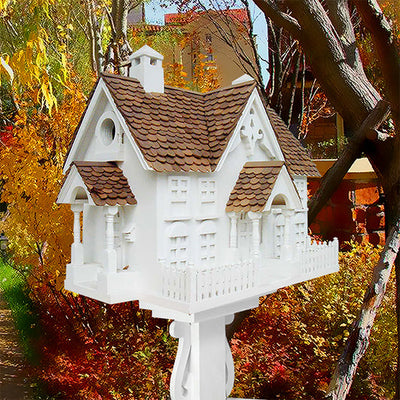
1. Wrension Bird House

A premium wren house with stunning architectural detail — this is the kind of garden centerpiece that stops visitors in their tracks. Despite its ornate appearance it is fully functional, built to the correct specifications for House and Carolina Wrens with proper drainage, ventilation, and a clean-out access panel.
From $201 — Shop Now →
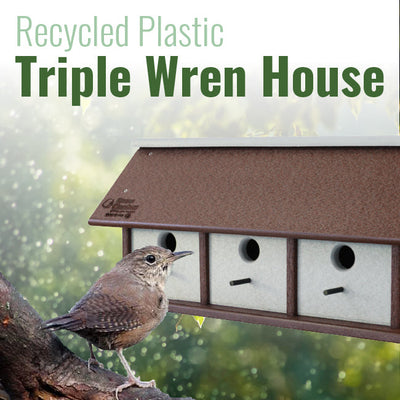
2. Recycled Plastic Triple Wren House — Horizontal

Three nesting cavities in one compact horizontal design. Wrens are territorial and often claim multiple cavities within their territory even when they only nest in one — this triple house allows one wren pair to defend all three, reducing competition from other species and making it a particularly effective design for wren habitat.
From $93 — Shop Now →
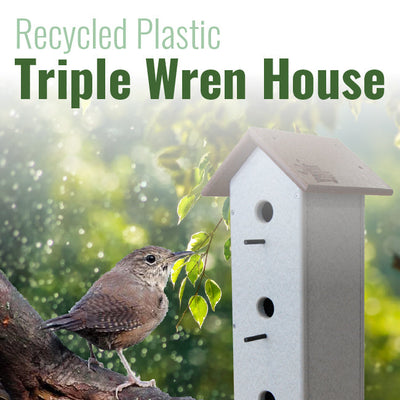
3. Recycled Plastic Triple Wren House — Vertical

The vertical version of the triple wren house takes up less horizontal space on a fence or pole, making it ideal for narrower garden spots. Made from recycled plastic, it will not rot, warp, or require painting — a genuinely maintenance-free nesting option that lasts for decades.
From $68 — Shop Now →
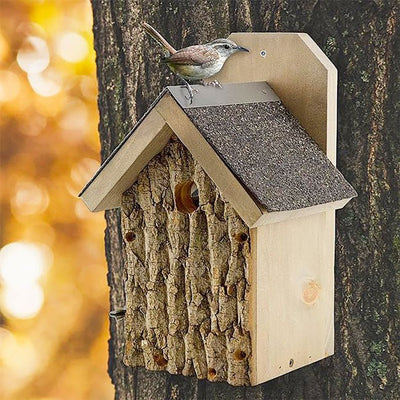
4. Uncle Dunkel’s Bark Clad Wren and Chickadee House

Natural bark cladding makes this house virtually invisible in a wooded or shrubby garden setting — which is exactly the habitat wrens prefer. The bark exterior provides natural insulation and the correct entrance hole size welcomes wrens and chickadees while excluding larger, more dominant species.
From $37 — Shop Now →
5. Recycled Plastic Hanging Wren House

A compact hanging wren house in a neutral brown and gray finish that suits any garden setting. The hanging design mimics the natural tree cavities wrens seek out in the wild, and the recycled plastic construction requires no maintenance whatsoever.
From $38 — Shop Now →
6. Coppertop Hanging Wren House

A copper-roofed hanging wren house that ages into a soft green patina outdoors rather than rusting or flaking. The metal roof sheds rain completely, keeping the nesting chamber dry through a wet spring — the single thing that most often decides whether a first brood survives.
From $65 — Shop Now →
7. Wellsville Wren House

A classic cedar wren house with clean, simple lines that suits both traditional and contemporary garden styles. The natural wood finish blends into garden plantings beautifully, and the solid construction will provide nesting habitat for wrens for many seasons.
From $29 — Shop Now →
8. Wren House — California Quail and Golden Poppy

A beautifully decorated wren house featuring California Quail and Golden Poppy artwork — a perfect garden accent for West Coast bird enthusiasts. Fully functional as a nesting box while doubling as a piece of garden art that celebrates native California wildlife.
From $28 — Shop Now →
How to Attract Wrens to a Nest Box
- Place it low and near cover. Wrens naturally nest in low thickets and shrubs, rarely higher than 10 feet. Position wren houses at 5–8 feet on a pole or fence post near dense shrubs or climbing plants — wrens will investigate immediately.
- Leave twigs nearby. Male House Wrens fill multiple cavities with dummy nests made of small sticks to attract a female. Leaving a pile of small twigs near the nest box gives him building material and speeds up nest establishment.
- Skip the perch. Nest boxes with perches below the entrance hole are actually worse for wrens and better for house sparrows, which use the perch to harass entering birds. Choose a wren house without a perch below the entrance for better nesting success.
Frequently Asked Questions
What size entrance hole does a wren house need?
House Wrens and Carolina Wrens use a 1.125-inch entrance hole. Bewick’s Wrens use 1.125 to 1.25 inches. This small entrance size excludes most competitor species including house sparrows (which need at least 1.25 inches) while allowing all wren species comfortable access.
Where should I mount a wren house?
5–8 feet high on a fence post, garden pole, or tree trunk near dense vegetation. Wrens prefer nest sites within or immediately adjacent to thickets, shrubs, or climbing vines. Avoid open, exposed positions — wrens find them unappealing compared to more sheltered spots.
Do wrens use birdhouses in winter?
Carolina Wrens are year-round residents and will roost in nest boxes during cold winter nights for warmth, even when not nesting. House Wrens migrate south in winter but return reliably to the same garden territories in spring, often reusing the same nest box year after year.
How many wren houses should I put up?
One pair of House Wrens typically defends a large territory and will claim multiple boxes even if they only nest in one. Putting up 2–3 boxes in the garden gives the male territory to defend, which actually increases the likelihood that a pair will take up residence in at least one of them.