Winter Bird Feeding Guide 2026 — What to Put Out, 9 Picks, and the One Thing Birds Can't Find in January
Share
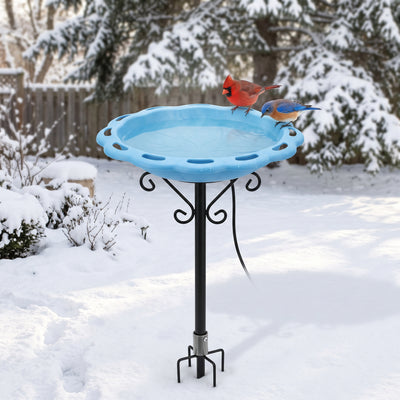
When people think about winter bird feeding they think about seed. But in a hard freeze, seed is rarely the thing birds can't find. Liquid water is. Ponds, puddles and gutters lock up, and the yard with open water becomes the busiest yard on the street. Audubon Great Lakes advises providing water in winter "especially when there is no snow," in a sunny spot where birds can see it, and points to heated birdbaths as an option.
This guide covers both halves: the right food in the right feeder, and the water. Every product below is something we sell, with the price as of October 2026.
What to feed birds in winter
The simplest way to plan is food → feeder → birds. This table follows Audubon Great Lakes' winter feeding guidance.
| Food | Feeder | Birds it brings |
|---|---|---|
| Suet cakes | Suet cage | Downy and other woodpeckers, titmice, nuthatches, chickadees |
| Black-oil sunflower, mixed seed, safflower, peanuts | Tube feeder | Chickadees, nuthatches, titmice, goldfinches; often pine siskins and purple and house finches |
| Safflower, sunflower, cracked corn | Hopper feeder | Northern cardinals, blue jays — plus the tube-feeder birds |
| Water | Heated bath or deicer | Almost everything above |
Suet: the highest-energy food you can offer
1. Coppertop Double Suet Cage Bird Feeder — $58.99
Holds two standard suet or seed cakes in an all-metal cage with a 1" x 0.5" grid, under a copper-colored roof that keeps rain off. Lift the roof up the hanger to refill. The cheapest way to add woodpeckers to your winter list. See the double suet cage →
2. Going Green Peanut or Large Suet Cake Feeder — $95.99
One feeder, two winter foods: fill it with 2.25 quarts of peanuts in the shell, or drop in a large suet or seed cake. The frame is recycled composite, the roof is clear plastic, and the perforated base drains water and lifts out for cleaning. See the peanut & suet feeder →
More options in our suet feeder guide.
Seed: tube and hopper feeders
3. Droll Yankees A-6RP Ring Pull Bird Feeder — $60.89
One of our best-sellers this fall. Six metal-reinforced ports stop squirrels chewing the openings bigger, and the tube holds 0.95 quarts of sunflower, safflower or mixed seed. The useful part in winter is cleaning: pull the ring at the top and all six ports drop out, so a full scrub takes minutes rather than an afternoon. See the Ring Pull feeder →
4. Bird's Choice Squirrel Proof Bird Feeder — $113.99
A steel hopper that holds 6 quarts (about 9 lbs) — fewer refills in the cold. The perch is spring-loaded and adjustable: anything heavier than the setting closes the ports, which keeps out squirrels and can be set to keep out grackles too. Hang it, or mount it on a post or pole. Cardinals and jays use it; 5-year guarantee. See the Bird's Choice feeder →
5. Giant Post Mounted Seed Tray with 4x4 Adapter — $83.10
Our top seller over the last 90 days. A cedar-framed tray with a drained metal floor that holds 7 quarts of sunflower seed or peanuts in the shell, and a steel bracket that fits a standard 4x4 post. There's also a version for 1" round poles ($85.60). See the Giant Seed Tray →
An honest caveat: Audubon Great Lakes advises against ground seed and platform feeders in places where deer are a problem, because they gather big flocks and draw deer and other animals. If that's your area, keep the tray raised on a post with a baffle below it, put out only what gets eaten in a day, and keep the ground underneath clean.
Water: the part most people skip
6. Farm Innovators 3-in-1 Heated Bird Bath — $102.99
The best-value heated bath we carry. A 13.5" bowl only an inch deep — shallow enough for goldfinches — with a hidden 75-watt thermostatic heater rated to -10°F that only works when the water is about to freeze. Three mounts in the box: deck-rail clamp (up to 2" thick), flat plate for a post or wall, or legs for the ground. Also in green. See the 3-in-1 heated bath →
7. Allied Precision Four Seasons Heated Bird Bath — $222.99
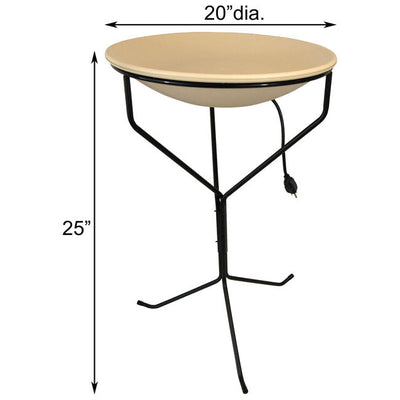
A 12.75" bowl that slopes to a 2" depth, with a textured floor for grip. A 70-watt thermostatic element hides between the layers of the bowl and switches on only near freezing. It clamps to a 2x4 or 2x6 deck rail or mounts on a pole, and unplugged it works as a normal bath all summer. See the Four Seasons bath →
8. Bird Bath Deicer, 200 Watts — $125.99
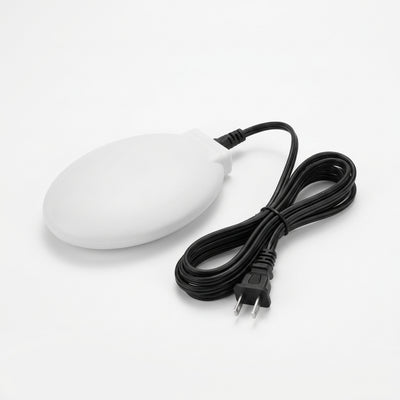
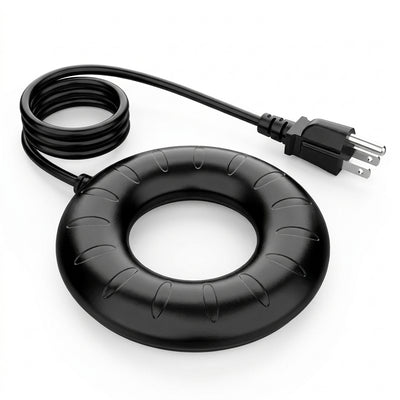
Already have a bird bath? Drop this in instead of buying a new one. It's thermostatic, has a stainless guard between birds and the element, and is listed as safe in ceramic, concrete and plastic baths. See the deicer →
Fourteen more options — and the outdoor-outlet problem to check before you buy — in our heated bird bath guide.
Shelter: a place to spend the night
9. Horizontal Winter Roost by Prime Retreat — $69.25
Not a nest box — a winter roost. Two 1.5" entrances sit low on the front so warm air stays trapped inside, and wooden slats give small birds like chickadees and wrens somewhere to perch together overnight. Mount it on a wall, or rest it on a branch or posts. See the winter roost →
Your winter routine
- Clean feeders every 1–2 weeks in 9 parts water to 1 part bleach. Scrub, then let them dry fully before refilling (Audubon Great Lakes).
- Scrub baths with 9 parts water to 1 part vinegar, and change the water about every other day.
- Put water in the sun so birds can see it from the air.
- Stop squirrels at the pole, not at the feeder — see our squirrel baffle guide for the 5-foot and 10-foot rules.
- Check your state's bird-flu guidance. Highly pathogenic avian influenza is still found in wild birds; Audubon suggests checking with your state Department of Natural Resources for local recommendations on feeders.
FAQ
Should I feed birds in winter?
Feeders and seed help most when natural food is scarce or buried under snow and ice. Keep them clean, and follow any local wildlife-agency advice.
What is the best food for birds in winter?
Suet for woodpeckers, nuthatches and chickadees; black-oil sunflower in a tube feeder for the widest range of small birds; safflower or sunflower in a hopper for cardinals and jays.
Do birds need water in winter?
Yes — especially in dry, snowless cold spells when every natural source is frozen. A heated bath or a deicer keeps one source open.
How much power does a heated bird bath use?
The baths here use a 70–75 watt thermostatic heater that only runs near freezing; the add-in deicer is 200 watts, also thermostatic.
Keep reading
- Best bird feeders for cardinals
- Best heated bird baths for winter
- Best squirrel baffles
- Gifts for bird lovers — 2026 holiday guide
Prices checked October 2026. Free shipping on every order and 30-day returns — see our shipping policy for delivery times. Feeding and cleaning guidance: Audubon Great Lakes, "Winter Bird Feeding 101."