Best Oriole Feeders in 2026 — Attract Baltimore & Orchard Orioles
Few garden moments match the first sight of a Baltimore Oriole — a flash of brilliant orange against spring foliage that signals the birds have returned from their tropical wintering grounds. Orioles are nectar, fruit, and jelly feeders rather than seed eaters, which means a standard bird feeder will not attract them. The right oriole feeder, stocked correctly and positioned well, is the difference between seeing orioles occasionally and having them visit reliably throughout the season.
Browse the full Oriole Feeders collection at BIRDLOVER.
The 8 Best Oriole Feeders in 2026
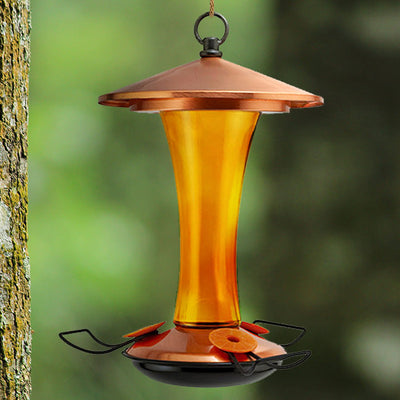
1. Mid-Century Coppertop Oriole Feeder

A beautifully designed oriole feeder with a warm copper top that catches the light and gives this piece genuine garden elegance. The 16 oz nectar reservoir is a practical size — large enough for multiple daily feedings without needing constant refilling, but small enough that nectar stays fresh rather than fermenting between visits. One of the most visually striking oriole feeders available.
From $45 — Shop Now →
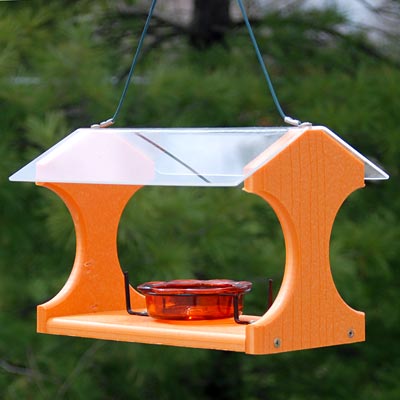
2. Going Green Recycled Plastic Oriole and Bluebird Feeder

A dual-purpose feeder designed to attract both orioles and bluebirds — two of the most sought-after garden birds in North America. The recycled plastic construction means no maintenance painting or staining, and the design accommodates mealworms and fruit alongside nectar, covering the full range of what both species eat.
From $51 — Shop Now →
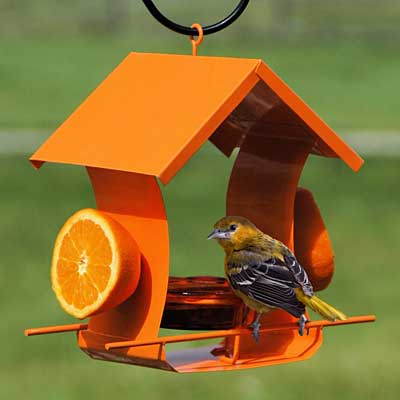
3. Orange Metal Six Station Oriole Feeder

Six separate feeding stations on a single orange metal feeder — allowing an entire oriole family to feed simultaneously without competition. The bold orange color is a visual magnet for orioles, which are strongly attracted to orange in the wild as it signals ripe fruit. An excellent choice for gardens where multiple orioles visit regularly.
From $32 — Shop Now →
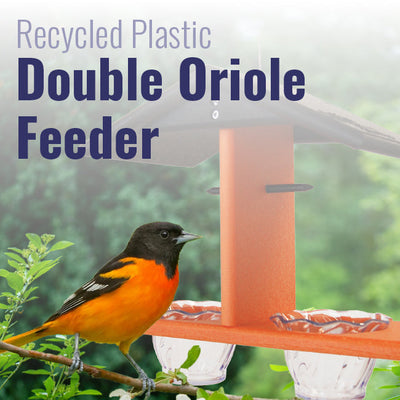
4. Recycled Plastic Double Oriole Feeder

A twin-station oriole feeder in a striking black and orange colorway that mimics the colors of the Baltimore Oriole itself. Two feeding ports reduce competition when a pair of orioles arrives together, and the recycled plastic construction handles outdoor conditions with zero maintenance required.
From $37 — Shop Now →
5. Recycled Plastic Single Oriole Feeder

A compact single-station oriole feeder — perfect for a balcony, patio, or smaller garden where space is at a premium. The vivid orange and black design is maximally visible to passing orioles, and the recycled plastic build makes this one of the most durable oriole feeders available at this price point.
From $37 — Shop Now →
6. Going Green Recycled Plastic Oriole Fruit Feeder

Designed specifically for fruit feeding — the oriole food type that is most effective at establishing a garden territory as their regular feeding site. Orange halves impaled on the spike ports give orioles the fresh fruit they migrate back for every spring. An essential complement to any nectar oriole feeder.
From $36 — Shop Now →
7. Patio Table with Umbrella Oriole Feeder

A charming miniature patio table and umbrella design that holds oriole nectar and grape jelly in separate reservoirs — giving orioles both their preferred foods in a single whimsical feeder. The umbrella provides a little shade for the nectar, slowing fermentation on hot days.
From $30 — Shop Now →
8. Going Green Oriole Feeder

A reliable, no-frills oriole nectar feeder in bold orange — everything an oriole feeder needs to be without unnecessary complexity. Easy to fill, easy to clean, durable recycled plastic construction, and priced to make it practical to put up several around the garden to cover multiple oriole territories.
From $32 — Shop Now →
How to Attract Orioles to Your Garden
- Put feeders out early. Baltimore Orioles arrive from migration in April and May and immediately begin establishing feeding territories. Have your oriole feeder out and stocked by late April — orioles that discover it during their first days back are far more likely to make your garden their regular stop throughout the season.
- Offer three foods simultaneously. Orioles eat nectar, fresh orange halves, and grape jelly. Offering all three from the start maximizes appeal. Grape jelly is often the quickest trigger — orioles find it irresistible and will investigate any garden where they spot the dark purple color.
- Position in the open but near tall trees. Orioles prefer to feed in visible, open spots where they have good sightlines, but they nest high in tall deciduous trees. A feeder positioned in the open 20–30 feet from a large tree sits in the sweet spot of their preferred territory range.
Frequently Asked Questions
What do orioles eat at feeders?
Baltimore Orioles eat three main foods at garden feeders: sugar nectar (same 4:1 water-to-sugar ratio as hummingbirds), fresh orange halves, and grape jelly. All three can be offered simultaneously on a multi-station oriole feeder. Avoid honey and artificial sweeteners — plain white sugar dissolved in water is the safest nectar formulation.
When do orioles arrive at feeders in spring?
In most of North America, Baltimore Orioles return from their wintering grounds in Central America between late April and mid-May. The exact timing varies by latitude — southern states see them earlier, northern states and Canada later. Setting up feeders by April 15th ensures they are ready when the first scouts arrive.
Why have orioles stopped visiting my feeder?
Oriole visits often drop off dramatically in July even when birds are still present — this is because summer provides abundant natural food including insects, ripe berries, and tree nectar. Continue offering fresh nectar and jelly regardless, as orioles will return to feeders in late summer before migration when natural food becomes scarcer.
Do orioles use birdhouses?
No — orioles are not cavity nesters and will not use birdhouses. They build distinctive hanging pouch nests woven from plant fibers, suspended from the tips of long branches high in trees. Offering nesting materials such as long plant fibers, string pieces, and strips of natural raffia can encourage orioles to nest in your garden trees.